
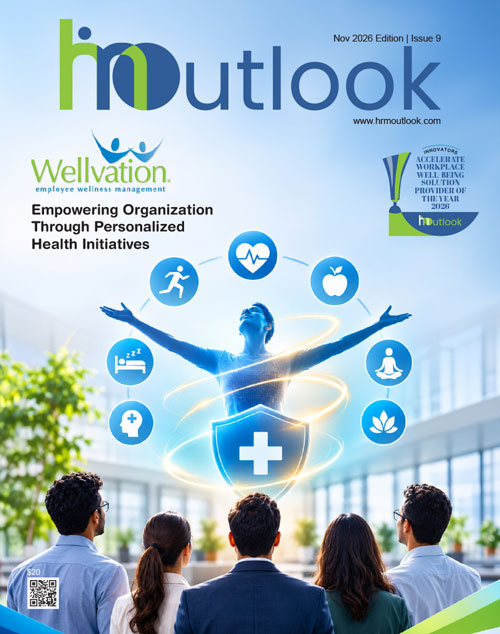
For many employees, the hardest part of becoming healthier is not knowing what to do. It is finding an approach that fits their circumstances, feels achievable, and remains relevant after the initial enthusiasm fades. That distinction has shaped Wellvation since its founding in 2008, as the company has worked to make workplace wellness more personal, practical, and responsive to the people it is designed to serve. Headquartered in Plymouth, Minnesota, Wellvation has developed its expertise through a longstanding relationship with Mayo Clinic, giving the company access to health and wellness insights and subject matter expertise. This relationship has also become one of the pillars of foundation for ManageWell™, the company's employer-provided wellness platform, which is designed to give organizations the flexibility to build programs around the needs of their workforce rather than forcing employees into a standard wellness journey.
The need for that flexibility is becoming increasingly apparent. Employers are dealing with burnout driven by demanding workloads, staffing shortages, constant connectivity, and increasingly complex jobs. Alongside those pressures, anxiety, depression, loneliness, emotional fatigue, and financial stress are affecting employees across workplaces. Hybrid and remote work have added another layer, sometimes weakening connection, team cohesion, and organizational culture. Employees may need support but still hesitate to seek it because of privacy concerns, stigma, limited awareness, or difficulties accessing care.
At the same time, expectations surrounding digital experiences have changed. Employees have become accustomed to consumer platforms that understand their preferences and deliver relevant information with little effort. Wellness programs are increasingly expected to offer personalized recommendations, relevant health content, mobile access, individual goals, and intuitive technology. Generic programs, by contrast, can struggle to maintain participation over time. Wellvation's response is to distinguish between a platform that is merely configurable and one that is genuinely personalized. ManageWell™ combines three elements: a validated health assessment, an algorithm that converts the resulting information into an individualized plan, and an adaptive system that can adjust recommendations as participant behavior changes. The assessment itself goes beyond conventional risk factors by considering how employees perceive their health and whether they are ready to make changes. That approach recognizes an important reality in behavior change. Someone may know that their blood pressure is elevated, for example, but may not yet be prepared to completely change their diet. Giving that person an overly ambitious recommendation may result in disengagement rather than progress. Wellvation's model instead seeks to meet individuals at their current stage and guide them toward resources that are more likely to be relevant and sustainable.
For employees, ManageWell™ brings together a substantial library of health and wellness resources. The platform includes more than 12,000 pieces of Mayo Clinic content, covering articles, tips, videos, slideshows, and podcasts. It also provides more than 100 ready-to-use programs that employers can customize according to their strategy and desired duration. Resources can be targeted using different criteria, allowing organizations to direct relevant content toward specific employee populations. Whereas, for employers, the platform extends into analytics and administration. ManageWell™ enables data to be reported on demand, giving organizations real-time visibility into their initiatives. Its incentive management capabilities are designed to accommodate different client strategies rather than restricting employers to a fixed model. The underlying philosophy is perhaps best captured by Dan Proulx, President, Wellvation, who describes the participant experience in simple terms, “a user should feel like the platform knows them.” The objective is not personalization as a marketing label, but the timely presentation of resources that have genuine relevance to an individual's circumstances.
It became particularly meaningful with Stress Less; a stress and resiliency program developed in collaboration with Mayo Clinic. Wellvation introduced the program just as the COVID-19 pandemic began, when uncertainty and emotional strain were escalating across workplaces. It subsequently became one of the platform's highest-rated offerings and continues to receive strong user reviews.
Wellvation is now extending that foundation through artificial intelligence. The company has begun implementing AI in different parts of ManageWell™ and uses a private large language model so that platform data remains within the ManageWell™ environment. The company is also drawing exclusively on Mayo Clinic information to train its LLM, providing a credible knowledge base for potential AI-generated recommendations. Possible applications include customized exercise programs, meal planning, and the faster identification of relevant tools and resources for individual users.
Behind the scenes, Wellvation is also exploring how AI can uncover insights that may not be immediately apparent through conventional analytics. The aim is to learn faster, identify meaningful patterns, and translate those insights into recommendations that can help clients improve outcomes. This forward-looking approach is supported by a development culture that remains closely connected to its clients. ManageWell™ is continually being refined, with customer feedback contributing directly to new ideas and capabilities. As Proulx puts it, “There isn’t a day that goes by where we are not writing new code.” That continuous development reflects a belief that workplace wellness cannot remain static while employee expectations, technology, and behavioral science continue to evolve.
After 18 years, Wellvation's direction remains rooted in a purpose that is both straightforward and increasingly important: helping people understand what motivates them and giving them practical support to live healthier lives. “Helping individuals discover their own motivations and lead the healthiest life they can is what drives us,” says Proulx. For Wellvation, the future of workplace wellness is therefore less about offering more programs and more about making the right support available to the right person at the right time. By combining Mayo Clinic expertise, behavioral insight, personalization, analytics, continuously evolving technology, and emerging AI capabilities, the company is positioning ManageWell™ as a platform built not simply to deliver wellness resources, but to make them meaningful to the people who use them.
Dan Proulx, President
wellvation.com
“Helping individuals discover their own motivations and lead the healthiest life they can is what drives us”
HRM Outlook magazine contains all the latest information about the workforce that is necessary to improve the performance of businesses. We hand over various topics, such as talent management, employment law, HR technology, recruitment, diversity, leadership, well-being, etc.
We respect your privacy. The email address you provide will be used solely for subscription purposes and will not be stored or shared.
Subscribe Now